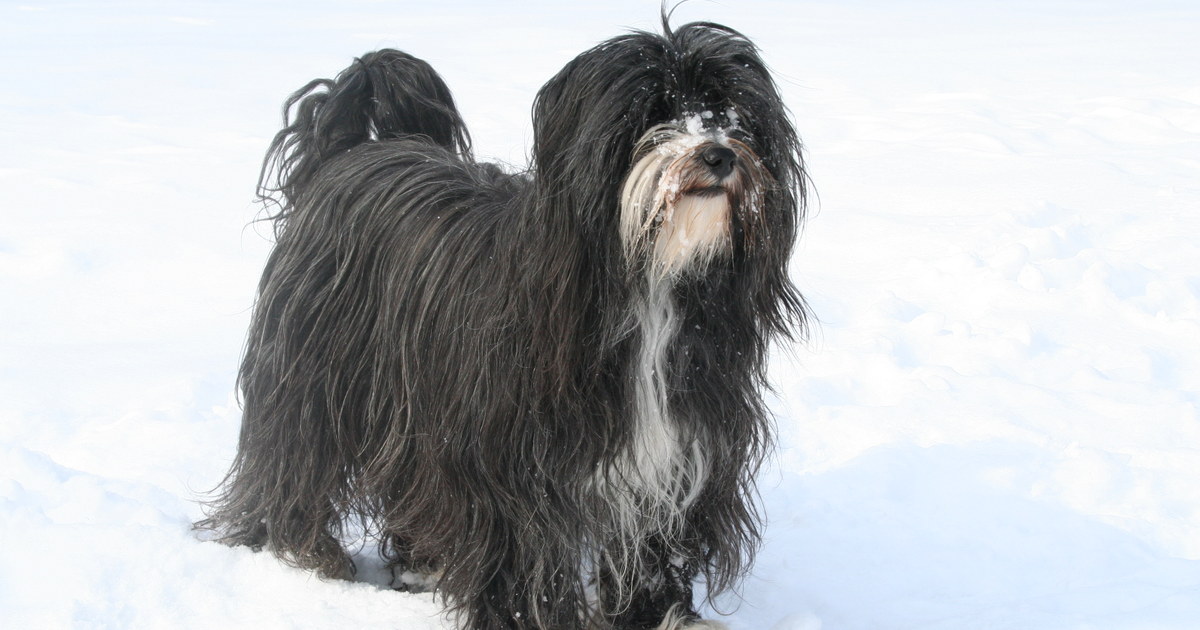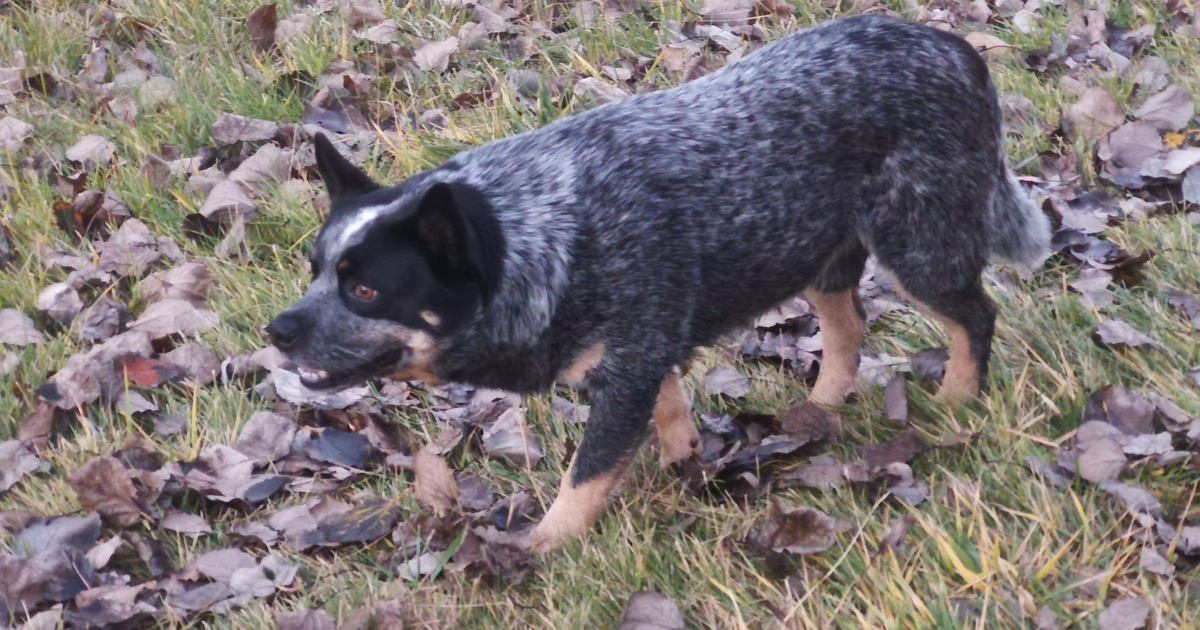
Bottom line: Late-onset neuronal ceroid lipofuscinosis (NCL) in the Australian Cattle Dog (Blue/Red Heeler) is caused by a missense change in the ATP13A2 gene (also called CLN12), the c.1118C>T, p.(Thr373Ile) variant. It is inherited in an autosomal recessive pattern, and Schmutz et al. (2019) found roughly 1 in 10 unaffected dogs carries a single copy. A DNA test reports genotype and breeding information — carrier, clear, or affected — not a clinical diagnosis, and it cannot predict the exact course of disease. NCL has no cure. If your dog shows relevant signs, consult a veterinarian, ideally a veterinary neurologist.
What NCL is, and the ATP13A2 mechanism


Neuronal ceroid lipofuscinosis (NCL, sometimes called “canine Batten disease”) is a family of inherited neurodegenerative disorders. As Katz et al. (2017) describe, the core problem is failed lysosomal degradation: a waxy autofluorescent storage pigment made of ceroid and lipofuscin builds up inside neurons and other cells. Because mature neurons no longer divide, they cannot dilute this cellular “waste,” so the deposits accumulate and ultimately drive neuronal death in the brain, cerebellum and retina.
In the Australian Cattle Dog, the gene at fault is ATP13A2 (also designated CLN12). It encodes a lysosomal transport ATPase that is highly expressed in the brain and acts as a lysosomal exporter of polyamines such as spermine. When that pump fails, the lysosome cannot maintain normal ion and polyamine balance, degradation stalls, and storage material piles up. Schmutz et al. (2019) identified a c.1118C>T missense variant, p.(Thr373Ile), in Cattle Dogs with late-onset NCL — a distinct change from the deletion previously reported in Tibetan Terriers, making the Cattle Dog the second dog breed with a documented ATP13A2/CLN12 variant (OMIA:001552-9615).
How NCL presents in Australian Cattle Dogs
SamHe’s about six and still seems fine — are there early warning signs I should watch for? Elena MarshSchmutz et al. (2019) reported onset around six years, with a slowly progressive neurological decline rather than a sudden collapse.Unlike the early-onset NCLs seen in some breeds, the ATP13A2 form in the Australian Cattle Dog is adult / late-onset, with signs typically beginning around six years of age (Schmutz et al. 2019). In the original report, three dogs — a dam and two of her offspring — developed a progressive neurological disorder, and all three carried two copies of the c.1118C>T variant.
As with other canine NCLs, the picture tends to evolve over months to years and can include cerebellar ataxia (an unsteady, poorly coordinated gait), cognitive and behavioural decline (loss of learned behaviours, disorientation, anxiety or personality change, sometimes likened to canine dementia), visual difficulty, and eventually seizures. These are described as general tendencies; individual dogs vary, and none of these signs is unique to NCL. Because Cattle Dogs are a high-drive working and herding breed, subtle early changes — hesitation on familiar ground, a working dog that starts misjudging stock or agility obstacles — can be easy to dismiss as ordinary ageing, so a veterinary work-up is essential before assuming a cause.
Inheritance and why carrier testing matters
SamMine is “just a carrier” — does that mean he’ll get sick himself? Elena MarshNo. Schmutz et al. (2019) found the variant homozygous in affected dogs, while the ~42 carriers among 394 unaffected dogs were clinically normal.ATP13A2 NCL is autosomal recessive: a dog must inherit one copy of the c.1118C>T variant from each parent (homozygous) to develop the disease. A dog with a single copy is a carrier — clinically normal and impossible to spot by eye — but it passes the variant to about half its offspring. In the Schmutz et al. (2019) cohort the genotype-phenotype match was clear: the affected dogs were homozygous, and the variant appeared in 42 of 394 unaffected dogs, a carrier frequency of roughly 10%.
That ~10% figure is exactly why pre-breeding DNA testing matters for this breed. Carriers look healthy, so only a genetic test can find them. Once carriers are identified, breeders can simply avoid carrier × carrier matings — pairing a carrier only with a tested-clear dog produces no affected puppies while still allowing valued carriers to remain in the gene pool, preserving genetic diversity. Experience in other NCL breeds shows this works: in Tibetan Terriers, DNA testing dropped the mutant allele frequency substantially once breeders could screen, a selection response documented in The Veterinary Journal (2014). Kennel clubs such as the AKC, ANKC and the UK Kennel Club encourage recording health-test results, so screening breeding stock also strengthens a breeder’s transparency.
How to test — US, UK and AU labs
SamI want to screen my Heeler before breeding — where do owners in the US, UK or Australia actually send samples? Elena MarshAnglophone reference and consumer labs both offer canine ATP13A2 testing; confirm the panel names the Australian Cattle Dog variant before you buy.United States. Reference laboratories such as the UC Davis Veterinary Genetics Laboratory (VGL) and Paw Print Genetics offer breed-specific and disease-specific canine DNA tests, and the consumer-level Embark panel is widely used by pet owners. For breeders, the OFA/CHIC registry records NCL DNA results, so a result can be published alongside a dog’s other health clearances. Pricing is usually a modest per-test fee in US dollars; treat any figure as approximate, since labs update rates over time.
United Kingdom. UK owners commonly use the Centre for Animal Genetics and Testing (CAGT, Cambridge) and similar reference labs, which offer breed-relevant NCL panels, typically billed in pounds sterling. Your own vet can collect a blood sample, or you can run a validated buccal (cheek) swab kit at home and post it back. Australia. Cattle Dog owners in Australia can order kits from these same international reference labs (samples ship internationally) or through ANKC-associated testing services, with results feeding into breeding records. Wherever you are, the key step is the same: before ordering, confirm the panel specifically covers Australian Cattle Dog ATP13A2 / CLN12 (the c.1118C>T variant), because a general “breed identity” DTC test may not include this particular disease locus. All prices should be read as approximate and confirmed with the lab at the time of ordering.
What a DNA test can — and cannot — tell you
SamSo what will this report actually tell me for certain? Elena MarshIt gives you a genotype — clear, carrier or affected — plus breeding guidance; a clinical diagnosis still needs a veterinary neurologist (OMIA; Katz et al. 2017).An ATP13A2 DNA test tells you this dog’s genotype: clear (no copies of the variant), carrier (one copy, heterozygous), or affected genotype (two copies, homozygous). From that you can make informed breeding decisions — for example, a “carrier × clear” pairing will not produce affected puppies and is a legitimate option. What the test cannot tell you is whether a dog has already begun to develop clinical disease, when signs will appear, or how quickly they will progress. A true clinical diagnosis must come from a veterinarian, ideally a neurologist, using history, neurological examination and imaging — not from a genetic report alone.
Two points bear repeating. First, NCL currently has no cure; management is supportive, aimed at comfort and quality of life (Katz et al. 2017). Second, this article is informational only and is not treatment or diagnostic advice — do not start, stop or change any therapy on your own. If your Australian Cattle Dog carries the affected genotype, or shows changes in vision, gait or cognition, have a veterinarian assess and manage the case. Genetic testing is reference information for breeding and hereditary risk; it is a separate thing from a clinical diagnosis.
Frequently asked questions
Q. My Australian Cattle Dog tested as an ATP13A2 carrier — will he get sick?
No. A carrier is heterozygous (one copy of the variant) and is clinically normal. In Schmutz et al. (2019), the carrier dogs among 394 unaffected animals showed no disease; only homozygous dogs (two copies) were affected. A carrier’s significance is for breeding — simply avoid pairing him with another carrier.
Q. How common is the variant in the breed?
Schmutz et al. (2019) found the c.1118C>T variant in 42 of 394 unaffected Australian Cattle Dogs, a carrier frequency of about 10%. That is high enough that breeders are advised to test breeding stock so carrier × carrier matings can be avoided.
Q. Where can I get my Heeler tested in the US, UK or Australia?
Use a lab in your country: in the US, UC Davis VGL, Paw Print Genetics or the consumer Embark panel, with results recordable at OFA/CHIC; in the UK, CAGT (Cambridge) and similar reference labs. Australian owners can use these international labs or ANKC-associated services. Always confirm the panel names the Australian Cattle Dog ATP13A2 (c.1118C>T) variant before ordering.
Q. Can NCL in Cattle Dogs be cured?
No — there is currently no cure (Katz et al. 2017). Care is supportive and focused on quality of life. A DNA test provides genetic and breeding reference information, not a clinical diagnosis; if you are worried about your dog, consult a veterinarian, ideally a neurologist, and do not change any treatment on your own.
Related articles
Related inherited-disease articles and the test-service coverage table.
Read about the same gene in other languages
References
- Schmutz I, et al. (2019) ATP13A2 missense variant in Australian Cattle Dogs with late onset neuronal ceroid lipofuscinosis. Molecular Genetics and Metabolism 127(1):95-106. https://pubmed.ncbi.nlm.nih.gov/30956123/
- Katz ML, et al. (2017) Canine neuronal ceroid lipofuscinoses: Promising models for preclinical testing of therapeutic interventions. Neurobiology of Disease. https://pmc.ncbi.nlm.nih.gov/articles/PMC5675811/
- Sanders DN, et al. (2014) Selection response to DNA testing for canine ceroid lipofuscinosis in Tibetan terriers. The Veterinary Journal. https://pubmed.ncbi.nlm.nih.gov/24929534/
- OMIA:001552-9615 Neuronal ceroid lipofuscinosis, 12, in Canis lupus familiaris (ATP13A2). https://www.omia.org/OMIA001552/9615/
- Orthopedic Foundation for Animals (OFA/CHIC) — Neuronal Ceroid Lipofuscinosis DNA test registry. https://ofa.org/neuronal-ceroid-lipofuscinosis/
- UC Davis Veterinary Genetics Laboratory — Dog DNA tests. https://vgl.ucdavis.edu/dna-tests/dog
How to get your pet tested
Some pet DNA tests screen for hereditary-disease carrier status or genetic risk markers, but the results are information, not a diagnosis. If your pet has symptoms or you need a confirmed diagnosis, please consult your veterinarian.
Below is where Neuronal Ceroid Lipofuscinosis (NCL) can be tested, grouped by where you live and marked by whether each service explicitly lists this variant (✅ = listed / ❓ = unverified / ❌ = not offered).
In the United States
In the United Kingdom
In India
Elsewhere
Note: even if the kit can be purchased/shipped internationally, the service itself (sample return, analysis, results) is not guaranteed in your country. Check each service’s stated service area and sample-return method before ordering.
Services offered in other regions (may not be available where you live)
Worried about your pet’s health? — Talk to a veterinarian
A confirmed diagnosis and any treatment plan are decisions for a veterinarian, not a test kit. The links below are professional resources.
AVMA — Find a veterinarian (American Veterinary Medical Association)
This section contains advertising (affiliate links); we may earn a commission if you buy through them. As an Amazon Associate, we earn from qualifying purchases. Genetic tests do not guarantee the prevention, diagnosis, or treatment of any disease — results indicate tendencies and provide information only.
This page is educational information, not veterinary diagnosis or advice. Always consult a veterinarian about your pet’s health.
About the author
Elena Marsh
Editor & writer (not a veterinarian)
A writer with a molecular-biology background and a lifelong dog and cat owner. Not a veterinarian — she translates peer-reviewed genetics research and primary data into plain language, always as information rather than diagnosis.