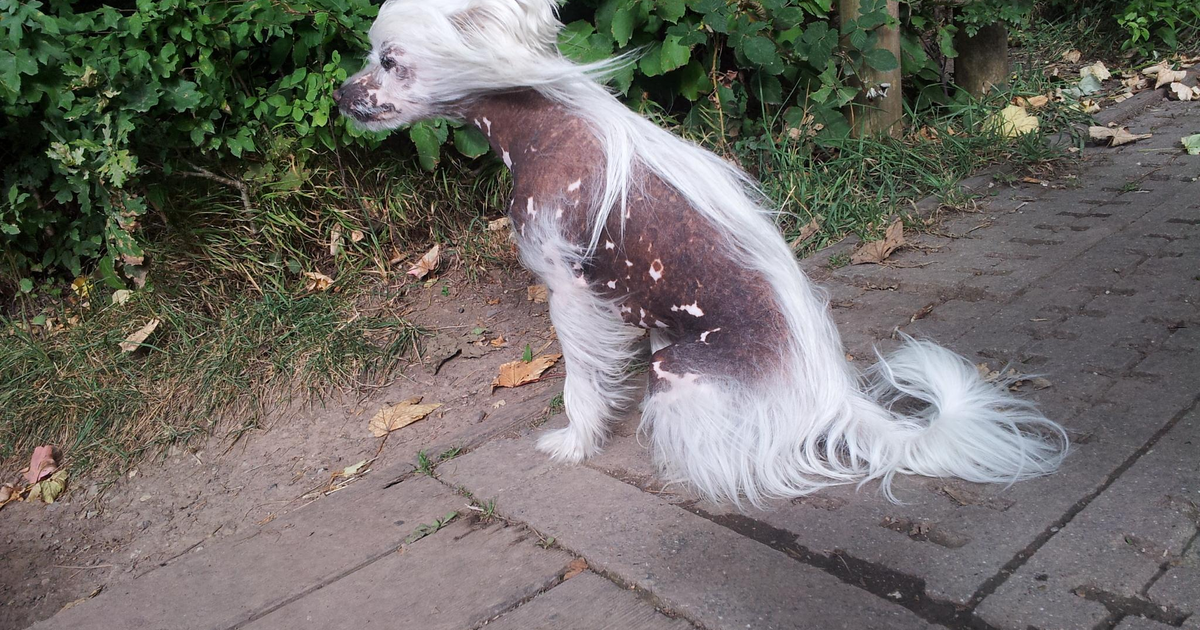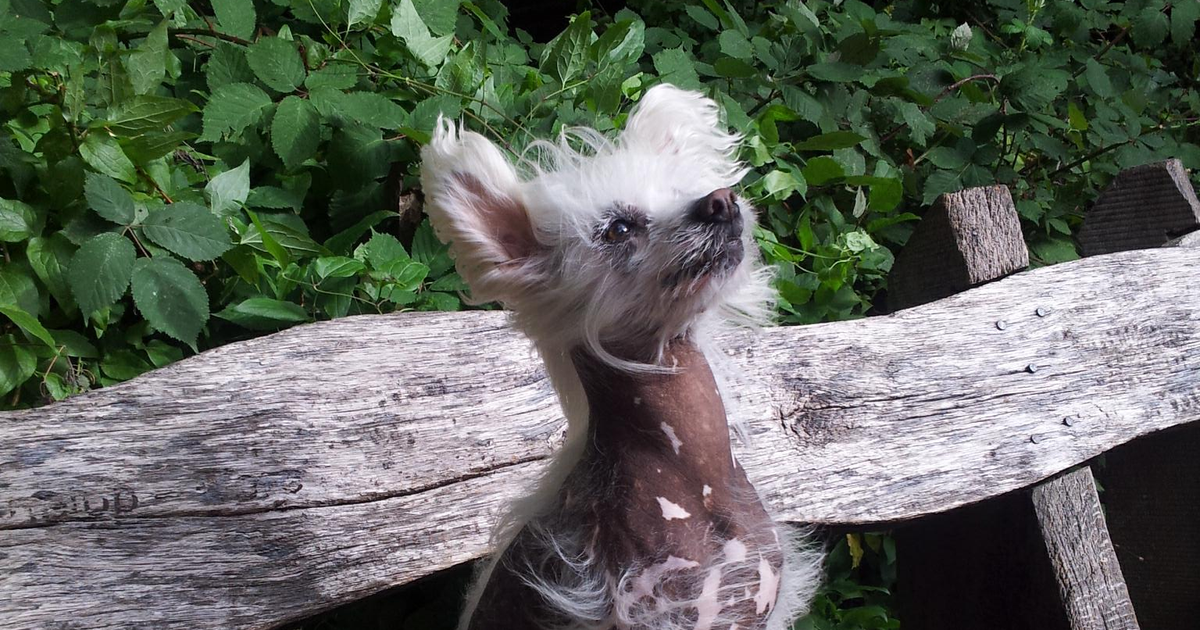

Bottom line: Hairlessness in the Xoloitzcuintli comes from one copy of a 7-base-pair duplication in exon 1 of the FOXI3 gene, the same variant, from one ancestral source, that a 2008 Science study by the University of Bern and the Broad Institute found in Chinese Crested and Peruvian hairless dogs. Every hairless Xolo carries exactly one copy. Coated Xolos carry none and are not carriers. Two copies are not expected to produce a live puppy, an inference drawn from never finding such a dog. The same gene explains why hairless Xolos so often lack premolars, which the AKC standard accepts. A DNA result describes one variant and is not a diagnosis; missing or retained teeth, skin eruptions and sun damage belong with a veterinarian.
The Xolo, AKC’s 170th breed (Non-Sporting Group, full recognition January 1, 2011), has climbed the AKC registration table from No. 143 in 2017 to No. 123 in 2025. Its written standard happens to describe a single-gene effect quite accurately.
- “Identical except for coat and dentition”: the AKC sentence that describes one gene
- The coated Xolo is simply the dog without the duplication
- Two registries, two pairing rules: what FCI 234 prefers and the AKC leaves open
- A 1965 doubt from the breed’s reviver, and what later genetics settled
- Missing premolars are fine, cropped ears are not: teeth in the standard and in the skulls
- 40 °C in 1956, “the same as other dogs” in 2012: skin, heat and the sunscreen dispute
- Other hairless dogs, other genes: where FOXI3 stops
- Does a hairless Xolo need a swab? US and European test options in October 2026
- A dentist, a dermatologist and a US,000 dental cap: care and insurance
- Frequently asked questions
- Related articles
- References
- How to get your pet tested
“Identical except for coat and dentition”: the AKC sentence that describes one gene
The AKC Official Standard of the Xoloitzcuintli (approved June 20, 2004, effective January 1, 2009) opens its description of the varieties with this line: “There are two varieties, hairless and coated, identical except for coat and dentition.” Four years after that standard was approved, geneticists showed why hair and teeth travel together.
In 2008, Drögemüller and colleagues, a team from the University of Bern, the University of Helsinki and the Broad Institute, ran a genome-wide association study on Chinese Crested dogs. According to OMIA’s summary of the paper, the scan compared 20 hairless and 19 coated dogs and narrowed the trait to a 102-kilobase interval on dog chromosome 17. Inside that interval sits FOXI3, a gene the authors describe as “specifically expressed in developing hair and teeth”. The hairless dogs had a frameshift: a 7-base-pair tandem duplication in exon 1. The Broad Institute’s press release reported the duplication in all 140 hairless dogs tested and in none of 87 coated dogs. Those counts come from the press release, because the full paper text was not available to us.
The same variant was present in the Chinese Crested, the Xoloitzcuintle and the Peruvian hairless dog, and a later NIH review by Parker and colleagues (2017) notes that a shared 102-kb haplotype shows the mutation “in all three breeds came from the same ancestral source”. In current nomenclature the variant is NM_001135646.1:c.57_63dup, p.(A23Rfs*219), listed as variant 571 under OMIA 000323-9615 (ectodermal dysplasia in dogs, CED). NCBI Gene ID 483075 places FOXI3 on chromosome 17, with two exons. The result is a premature stop and, in Parker’s words, “loss of 95% of the normal protein”.
OMIA classes the inheritance as incomplete dominant (semidominant); labs variously say semi-dominant, codominant or dominant. In practice: one copy gives a hairless dog with a typical dental pattern, no copy a coated dog, and two copies no puppy at all.
The coated Xolo is simply the dog without the duplication
The Xoloitzcuintli Club of America (XCA, the AKC parent club, formed October 26, 1986) has a page called “The Secret Xolo”. It makes the point that people may already have seen a coated Xolo without recognising the breed. On its About Xolos page the club notes that both varieties are born in the same litter, and its club history describes the XCA/AKC standard as “the first standard to include the Coateds”.
Genetically, the coated Xolo is the easiest dog in the breed to describe: it has two ordinary copies of FOXI3. It is not a hidden carrier, it cannot pass on hairlessness, and the term “powder puff”, which Embark uses for unaffected dogs on its Xolo page, is borrowed from the Chinese Crested. Parker’s review adds the logical consequence. Because a hairless dog must be heterozygous, coated littermates turn up alongside hairless pups whenever the parents are hairless.
How “normal” is the coat itself? The closest tissue study is in Chinese Crested dogs, not Xolos. At the University of Bern, Wiener and colleagues (2013) examined skin biopsies from 22 Chinese Crested dogs, plus glands from two more at post-mortem. Dogs with the FOXI3 mutation had only simple primary hair follicles. Non-mutant powderpuffs had compound follicles “identical to other dog breeds”. The degree of hairlessness also varied among mutants, from truly hairless to semi-coated, and Parker’s review suggests modifier genes might explain that spread. That is why the AKC standard allows some short, coarse hair on the head, feet and last third of the tail in the hairless variety. It is still one copy of the same duplication.
SamSo when someone calls a coated Xolo a “mistake” or a cross, that is just wrong? Elena MarshGenetically, yes. In the 2013 Bern skin biopsies, non-mutant dogs had follicles identical to other breeds. A coated Xolo has two ordinary FOXI3 copies and carries nothing.Two registries, two pairing rules: what FCI 234 prefers and the AKC leaves open
The international standard, FCI-Standard No. 234 (translated from the Federación Canófila Mexicana, official valid version published October 8, 2012), puts genetics into its preamble. “The gene that produces the absence of hair is dominant,” it says, and “The hairless to hairless breeding will produce the least numbers of coated dogs therefore this has been preferred.” It goes further: “The breeding between two coated Xoloitzcuintles is not permitted,” and coated breeding stock must descend from at least three generations of hairless-to-hairless breeding.
In the United States, no comparable rule turned up. The XCA Code of Recommended Ethical Practices (revised October 21, 2020) asks members to weigh “inheritable disorders, genetic traits” when choosing mates, to obtain AKC breed health testing “when applicable”, and to register every litter with the AKC. It says nothing about which coat varieties to pair, and we found no AKC rule on coated-to-coated litters.
Mendelian expectations for each pairing, beside the FCI rule (not counts from Xolo litters):
| Parents | FCI 234 position | Expected among puppies actually born | Expected losses before birth |
|---|---|---|---|
| Hairless x hairless | Preferred | About 2 hairless for every 1 coated | About 1 in 4 conceptions carries two copies |
| Hairless x coated | Allowed | About 1 hairless : 1 coated | None expected |
| Coated x coated | Not permitted | All coated | None expected |
Both statements hold: hairless-to-hairless matings give the lowest share of coated puppies, and they are the only pairing in which double-copy embryos are expected. OMIA puts it mildly: breeding hairless dogs to each other “may result in smaller litter sizes”. No study we found measured litter size in Xolos or in the other two breeds, so no percentage reduction can be quoted.
The lethality itself also rests on indirect evidence. No dog with two copies has ever been found among genotyped animals; Parker’s review writes that “the lack of homozygotes … suggests that the mutation is embryonic lethal”. Older breeding work points the same way. Robinson (1985) called the double dose “a prenatal lethal”, and a University of Missouri pedigree of 51 dogs (O’Brien et al., 2005) showed the trait segregating “as an autosomal dominant with homozygous lethality”. Sources differ on timing. OMIA’s summary says such embryos “die very early during pregnancy and are resorbed”, while an AKC history article says a puppy with two copies “will die in utero”. No genotyped embryo data were found to settle the point.
A 1965 doubt from the breed’s reviver, and what later genetics settled
Modern Xolos go back to a mid-1950s revival in Mexico. Norman Pelham Wright chaired the committee that wrote the 1956 Mexican standard. A history file hosted by the XCA reprints a 1965 text in which Wright recalls only one conforming dog registered in 1955 and “more than 70” a decade later, with foundation dogs from the Balsas River Valley in Guerrero. The breed reached definitive FCI recognition on November 6, 1961, and the Federación Canófila Mexicana has used the Xolo on its logo since 1940.
Wright also reported a breeding rule he had been told about: hairless matings “allegedly consist of 25 percent with normal coats (homozygous), 50 percent hairless (heterozygous), and 25 percent still-born”. He added that the experience of Mexican breeders since 1955, including his own, “does not seem to confirm” it. An XCA note printed beside his words says later studies confirmed that the double dose is lethal.
If double-copy embryos are resorbed early, as OMIA describes, breeders would see smaller litters rather than still-born puppies, which may explain Wright’s doubt. In Japan, Goto and colleagues (1987) attributed hairlessness “accompanied by defective teeth” in Mexican hairless dogs to “an autosomal dominant semi-lethal gene”. In a University of Tokyo study, Kimura, Ohshima and Doi (1993) bred hairless descendants of Mexican hairless dogs to Beagles and saw hairless and haired pups in a 1:1 ratio. They also found that hairless pups survived markedly less well than haired ones until cages were kept at 25 °C or more, which raised survival to 50 to 90 percent.
The Tokyo animals were a Beagle-cross research colony, not registered Xolos, and were never genotyped for FOXI3, so their figures are history rather than a forecast. OMIA notes, without numbers, that “neonatal deaths are more common in hairless pups than in their normal littermates”. Weak newborns need a veterinarian, not decades-old colony data.
Missing premolars are fine, cropped ears are not: teeth in the standard and in the skulls
In the AKC show ring, only two things disqualify a Xolo: height under 10 or over 24 inches, and cropped ears. On teeth, the AKC standard reads: “In the hairless variety, the absence of premolars is acceptable. Complete set of incisors preferred but lack thereof is not to be penalized. In the coated variety, complete dentition is required.” FCI 234 goes further for the hairless variety, accepting missing incisors, canines, molars and premolars as well as rotated teeth, and states that “the absence of hair is closely linked to the absence of teeth”. Coated dogs under FCI need all 42 teeth. Back in 1965, Wright had already described “an almost invariable absence of teeth between the foremost molars and the incisors”.
The most detailed dental data on FOXI3 dogs comes from an unusual source. Kupczik and colleagues (2017, Scientific Reports) micro-CT-scanned 14 skulls kept at the University of Jena’s Phyletisches Museum. The skulls came from Ludwig Plate’s breeding experiment of 1914 to 1919, which crossed a male hairless dog “originally from Ceylon” with a coated Dachshund. They are not Xolos, but ancient-DNA testing confirmed that every hairless or patchy dog whose DNA could be read (six animals) carried one copy of the same 7-bp duplication, while four coated dogs carried none.
| Finding in the Jena skulls | Hairless (one copy) | Coated (no copy) |
|---|---|---|
| Permanent canines and premolars | Entirely absent, with incisors partly absent too | Present |
| Deciduous (baby) canines and premolars | Retained in most dogs | Replaced by the permanent set |
| First molar | Present, but the lower first molar lacked three of its cusps | Present, normal cusps |
| Third molars missing | 3 of 5 adults | Lower third molar missing in 3 of 4 adults |
| First molar length | Mean 15.08 mm (n=6) | Mean 16.06 mm (n=7); difference not significant, p=0.353 |
Two lines in that table call for caution. Third molars were missing just as often in coated dogs, so their absence cannot be blamed on FOXI3. And the first molars were not significantly shorter. The authors read the overall pattern as haploinsufficiency: in dogs, one working FOXI3 copy is not enough for normal tooth development, although in mice it appears to be. With 14 skulls from one historical line, it cannot say how often a modern Xolo keeps a baby tooth.
The XCA adds that hairless Xolos often have forward-pointing “tusks” instead of normal canines, which the club believes come from the hairless gene. That fits the skull data but is not a measured frequency.
SamOur puppy still has two baby teeth at seven months. Is that just the hairless thing? Elena MarshPossibly. In the 2017 Jena micro-CT series most hairless dogs kept deciduous canines and premolars. Only a vet exam shows whether a retained tooth causes trouble.40 °C in 1956, “the same as other dogs” in 2012: skin, heat and the sunscreen dispute
The 1956 Mexican standard, reprinted in English by the XCA, said the skin “feels hot to the touch, given that the normal temperature is approximately 40 degrees centigrade”. FCI 234 corrected this in 2012: the hairless Xolo’s “body temperature is the same as in other dogs with hair”. It adds that the dog “tends to sweat through its feet”, which is why it “seldom pants, except in extreme heat”, and that the skin “requires more care from exposure to the sun”.
Gland studies support the idea that FOXI3 dogs are not missing their sweat machinery. In Chinese Crested dogs, Wiener and colleagues (2013) found the skin’s apocrine glands and the respiratory mucous glands of mutant dogs “present and normal”. In a 2012 overview, Leeb noted that, unlike dogs with X-linked ectodermal dysplasia, the eccrine glands in these hairless breeds are normal. Dogs sweat mainly through the eccrine glands of their paw pads, which is consistent with FCI’s remark about the feet. Body-surface sweating is a different matter: in the Japanese laboratory colony described below, Kimura and Doi (1996) reported that “the sweat glands showed no perspiration in the sudorific test”. The data on surface sweating are therefore split, and those colony dogs were Beagle crosses that were never genotyped.
Most skin data on Mexican-hairless-type dogs come from a 1990s laboratory colony in Japan, kept at the research center of Nihon Nosan Kogyo in Ibaraki (the 1993 breeding study above was published from the University of Tokyo). In that colony, Kimura and Doi documented blackhead-type comedones on the back, limbs and prepuce (1996). They also found that artificial UV at 40 kJ/m² caused visible sunburn, whereas natural sunlight at 90 kJ/m² mostly produced tanning within four to seven days (1995). Those dogs were Beagle crosses, were never genotyped, and were exposed under experimental conditions, so the numbers are not dosing advice for a pet.
US sources disagree openly on sun protection. The AKC breed page says “Hairless dogs need sunscreen with prolonged exposure to direct sun” and that young dogs “may suffer from adolescent acne”. The XCA’s “About Xolos” page states “The correct Xoloitzcuintli does NOT need sunscreen, or clothing for protection”, although it also describes first-year breakouts as the skin and oil glands mature. An AKC article quotes breeders who say lighter-coloured hairless Xolos “may need a bit of sunscreen”. Pale skin, past burns, and persistent redness or comedones are reasons to ask a veterinarian, who should guide any product choice.
Beyond that, the record is thin. A 2025 case series from a Peruvian university described a rare annular skin eruption in three hairless dogs, with no prevalence figure. LABOKLIN and the Parker review mention occasional outer-ear malformations, but we found no canine primary dataset. No modern figures exist for sunburn, comedones or skin tumours in pet Xolos.
Other hairless dogs, other genes: where FOXI3 stops
FOXI3 is not the explanation for every bald dog. In a 2020 G3 paper, Parker and colleagues wrote that “only two genes have been associated with hairlessness in dogs”: FOXI3 in the Chinese Crested, Xoloitzcuintli and Peruvian Inca Orchid, and SGK3 in two other breeds. The American Hairless Terrier carries a recessive SGK3 deletion, a different variant with a different inheritance pattern that is not lethal in two copies.
The second SGK3 breed is the Scottish Deerhound. At the University of Helsinki, Hytönen and Lohi (2019) found a frameshift insertion that causes recessive hairlessness: puppies are born with sparse hair and lose it within about two months. Among 66 Deerhounds genotyped, two were affected and the cohort’s carrier frequency was 12%, while none of 91 Irish Wolfhounds carried it. Further back, Casal and colleagues (1997) described X-linked ectodermal dysplasia in a German Shepherd puppy whose hairless skin had no follicles, adnexa or eccrine glands. That condition involves a different gene (EDA) and is a separate disease.
A FOXI3 result therefore says nothing about SGK3 or EDA; Wisdom Panel, for instance, lists the three hairlessness traits separately and X-linked ectodermal dysplasia as a health condition. Looks alone also say little about ancestry. In the 161-breed analysis by Parker and colleagues (Cell Reports, 2017), the Xoloitzcuintli and Peruvian hairless dog were “split between divergent clades” and showed signs of crossing with European herding dogs, documented for the German Shepherd Dog.
Does a hairless Xolo need a swab? US and European test options in October 2026
A hairless Xolo’s coat already gives away its FOXI3 genotype: one copy. Testing adds information mainly in three cases: confirming that a coated dog is clear (expected, since it has no copy), sorting a heavily haired hairless puppy from a coated one, and checking a Xolo-type mixed-breed dog. The OFA/CHIC program for the Xolo (breed code XC) asks for an eye exam, a cardiac exam and either hips/PennHIP (Standard and Miniature) or patellas (Toy). It lists no DNA test.
| Provider | What we found (retrieved Oct 20, 2026) | Price shown |
|---|---|---|
| Wisdom Panel Premium (US) | Trait “Hairlessness (Discovered in the Chinese Crested Dog)”, FOXI3, labelled “Linkage test”; separate SGK3 traits; results within 3 weeks | US$159.99 list, US$127.99 October sale |
| Embark (US) | Xolo breed page names the shared dominant mutation; whether the kit reports FOXI3 could not be confirmed | Breed + Health shown at US$139 |
| Paw Print Genetics (US) | Test #192 “Hr Locus (FOXI3 …)” exists as a title; pages now redirect to an Orivet merger notice | Not available |
| Animal Genetics / UC Davis VGL (US) | No FOXI3 test found; VGL’s hairlessness test targets the terrier (SGK3) form | – |
| Genomia (Czech Republic) | “Hairlessness in dogs”, 7-bp duplication in FOXI3 exon 1; Xoloitzcuintle on the breed list; 12 business days | US$56.00 before VAT, shipping extra |
| AnimaLabs (Croatia) | FOXI3 c.57_63dup; cheek swab or EDTA blood | EUR 54.90 incl. VAT |
| LABOKLIN (Germany) | Service ID 8599; FOXI3 for Chinese Crested, Mexican and Peruvian hairless dogs; 1 to 2 weeks after arrival | Not shown on the English page |
Two labelling details are worth knowing before you order. First, the test name is often written as “Hairlessness (powderpuff)” (LABOKLIN 8599), as “Hr Locus” (Paw Print), or as “CED”, but the gene is FOXI3 in every case. Second, Wisdom calls its result a “Linkage test” and does not define the term on the product page. Going by Wisdom’s own label, the result comes from a nearby marker rather than a direct read of the duplication, so ask how a linkage result is reported before relying on it for a breeding decision. Shipping costs and any import paperwork for samples sent from the US to Pilsen or Zagreb were not captured, so check with the lab first.
A dentist, a dermatologist and a US,000 dental cap: care and insurance
For teeth, the usual route is a general practitioner first, then referral. The American Veterinary Dental College runs a “Find A Board Certified Veterinary Dentist” search. AVDC is the specialist certifying body in veterinary dentistry for North America, recognised by the American Board of Veterinary Specialties. For acne that doesn’t settle, recurrent redness or lesions on sun-exposed skin, the American College of Veterinary Dermatology lists board-certified dermatologists in its directory.
Insurance wording shapes what happens to those dental bills. Embrace says every accident and illness policy covers dental illness and injury, including eligible extractions and malocclusions, up to US$1,000 per policy term. Cleanings are not covered. Hereditary and congenital conditions are covered “when not pre-existing at the time of enrollment”, and the policy never covers “Breeding, whelping, or pregnancy” or DNA testing. For a breeder, that means any loss from a hairless-to-hairless litter is a cost no policy reimburses.
The NAIC Pet Insurance Model Act (MO-633) treats a condition as pre-existing if signs or symptoms were documented before cover began, and it defines congenital conditions as present from birth. It applies only in states that have enacted it, and we did not verify which states those are. Our reading, which is an inference and not an insurer statement: hairlessness itself is not an illness, but missing or retained teeth recorded at the first puppy exam could later be cited as an earlier sign. Enrolling early and asking the insurer in writing how it treats congenitally absent teeth helps. We found no US statute aimed at hairless breeds; the binding rules here are the AKC’s and the XCA’s.
Frequently asked questions
Q. Is a coated Xolo a carrier of the hairless gene?
No. A coated Xolo has no copy of the FOXI3 duplication and cannot pass hairlessness on. “Carrier” is the wrong word in this breed, because every dog with one copy is visibly hairless.
Q. Can two hairless Xolos produce coated puppies?
Yes. Each hairless parent has one ordinary copy to pass on. Among the puppies actually born, roughly one in three is expected to be coated, and about a quarter of conceptions are expected to carry two copies and not develop.
Q. How much smaller are hairless-to-hairless litters?
Nobody has published a measured figure for Xolos, Chinese Cresteds or Peruvian dogs. OMIA says such matings “may result in smaller litter sizes”, and the one-in-four loss is a Mendelian expectation, not an observed count.
Q. My hairless Xolo is missing premolars. Is that a health problem?
Missing premolars are expected in the hairless variety and accepted by the AKC standard. Whether a particular gap, retained baby tooth or tusk-like canine needs treatment is something only a veterinarian can judge, if necessary with a board-certified veterinary dentist. A genetic result is not a diagnosis.
Q. Will a FOXI3 test tell me about an American Hairless Terrier or a bald mixed-breed dog?
It tells you about FOXI3 only. American Hairless Terriers and Scottish Deerhounds are hairless because of SGK3, and X-linked ectodermal dysplasia involves EDA. A clear FOXI3 result in a hairless dog points toward one of those other causes, which a veterinarian should look into.
Q. Is it true that hairless Xolos run hot or cannot sweat?
They do not run hot: FCI’s 2012 standard says their body temperature is the same as in coated dogs. Sweating is more nuanced. FCI says they sweat through their feet, and the eccrine glands there are reported normal, but a 1990s Japanese colony study of Mexican-hairless crosses found no body-surface perspiration in a sweat test. Heat stress, sunburn and skin lesions still deserve a veterinary visit.
Related articles
Related inherited-disease articles and the test-service coverage table.



Read about the same gene in other languages
References
- Drögemüller C, Karlsson EK, Hytönen MK, Perloski M, Dolf G, Sainio K, Lohi H, Lindblad-Toh K, Leeb T (2008). A mutation in hairless dogs implicates FOXI3 in ectodermal development. Science 321(5895):1462.
- Kupczik K, Cagan A, Brauer S, Fischer MS (2017). The dental phenotype of hairless dogs with FOXI3 haploinsufficiency. Scientific Reports 7:5459.
- Wiener DJ, Gurtner C, Panakova L, Mausberg TB, Müller EJ, Drögemüller C, Leeb T, Welle MM (2013). Clinical and histological characterization of hair coat and glandular tissue of Chinese crested dogs. Veterinary Dermatology 24(2):274-e62.
- Parker HG, Harris A, Dreger DL, Davis BW, Ostrander EA (2017). The bald and the beautiful: hairlessness in domestic dog breeds. Philosophical Transactions of the Royal Society B 372(1713):20150488.
- Parker HG, Dreger DL, Rimbault M, Davis BW, Mullen AB, Carpintero-Ramirez G, Ostrander EA (2017). Genomic analyses reveal the influence of geographic origin, migration, and hybridization on modern dog breed development. Cell Reports 19(4):697-708.
- O’Brien DP, Johnson GS, Schnabel RD, Khan S, Coates JR, Johnson GC, Taylor JF (2005). Genetic mapping of canine multiple system degeneration and ectodermal dysplasia loci. Journal of Heredity 96(7):727-734.
- Robinson R (1985). Chinese crested dog. Journal of Heredity 76(3):217-218.
- Goto N, Imamura K, Miura Y, Ogawa T, Hamada H (1987). The Mexican hairless dog, its morphology and inheritance. Experimental Animals 36(1):87-90.
- Kimura T, Ohshima S, Doi K (1993). The inheritance and breeding results of hairless descendants of Mexican hairless dogs. Laboratory Animals 27(1):55-58.
- Kimura T, Doi K (1995). Dorsal skin reactions to sunlight and artificial ultraviolet light in hairless descendants of Mexican hairless dogs. Experimental Animals 44(4):293-299.
- Kimura T, Doi K (1996). Spontaneous comedones on the skin of hairless descendants of Mexican hairless dogs. Experimental Animals 45(4):377-384.
- Leeb T (2012). Animal models of ectodermal dysplasia. Head & Face Medicine 8(Suppl 1):I9.
- Venturo R, Ferrer L, Bernard P, Guenova E, Delverdier M, Cadiergues MC, Combarros D (2025). Putative erythema annulare centrifugum in two Peruvian hairless and one Chinese crested dog. Veterinary Dermatology 36(5):712-718.
- Hytönen MK, Lohi H (2019). A frameshift insertion in SGK3 leads to recessive hairlessness in Scottish Deerhounds: a candidate gene for human alopecia conditions. Human Genetics 138(5):535-539.
- Parker HG, Whitaker DT, Harris AC, Ostrander EA (2020). Whole genome analysis of a single Scottish Deerhound dog family provides independent corroboration that a SGK3 coding variant leads to hairlessness. G3 Genes|Genomes|Genetics 10(1):293-297.
- Casal ML, Jezyk PF, Greek JM, Goldschmidt MH, Patterson DF (1997). X-linked ectodermal dysplasia in the dog. Journal of Heredity 88(6):513-517.
- Online Mendelian Inheritance in Animals (OMIA). OMIA:000323-9615 Ectodermal dysplasia in Canis lupus familiaris (dog). University of Sydney. doi:10.25910/2AMR-PV70.
- NCBI Gene ID 483075. FOXI3 forkhead box I3 [Canis lupus familiaris].
- Fédération Cynologique Internationale. FCI-Standard No. 234 Xoloitzcuintle (Hairless Variety & Coated Variety) (EN, 28.01.2014; official valid standard published 08.10.2012).
- American Kennel Club. Official Standard of the Xoloitzcuintli (approved June 20, 2004, effective January 1, 2009); Official Standard of the Chinese Crested (approved June 12, 1990, effective April 1, 1991); Xoloitzcuintli Club of America judges’ education presentation.
Featured image: XoloLarge3 (Canarian / Wikimedia Commons, CC BY-SA 4.0)
How to get your pet tested
Some pet DNA tests screen for hereditary-disease carrier status or genetic risk markers, but the results are information, not a diagnosis. If your pet has symptoms or you need a confirmed diagnosis, please consult your veterinarian.
Below is where Canine ectodermal dysplasia / hairlessness (FOXI3) can be tested, grouped by where you live and marked by whether each service explicitly lists this variant (✅ = listed / ❓ = unverified / ❌ = not offered).
In the United States
In the United Kingdom
In India
Elsewhere
Note: even if the kit can be purchased/shipped internationally, the service itself (sample return, analysis, results) is not guaranteed in your country. Check each service’s stated service area and sample-return method before ordering.
Services offered in other regions (may not be available where you live)
Worried about your pet’s health? — Talk to a veterinarian
A confirmed diagnosis and any treatment plan are decisions for a veterinarian, not a test kit. The links below are professional resources.
AVMA — Find a veterinarian (American Veterinary Medical Association)
This section contains advertising (affiliate links); we may earn a commission if you buy through them. As an Amazon Associate, we earn from qualifying purchases. Genetic tests do not guarantee the prevention, diagnosis, or treatment of any disease — results indicate tendencies and provide information only.
This page is educational information, not veterinary diagnosis or advice. Always consult a veterinarian about your pet’s health.
About the author
Elena Marsh
Editor & writer (not a veterinarian)
A writer with a molecular-biology background and a lifelong dog and cat owner. Not a veterinarian — she translates peer-reviewed genetics research and primary data into plain language, always as information rather than diagnosis.