Conclusion: In 2021, veterinary geneticists reported the first confirmed Newfoundland with Lafora disease — a dog whose myoclonic epilepsy was traced to a homozygous dodecamer repeat expansion in the NHLRC1 gene, the same mutation first identified in Miniature Wirehaired Dachshunds in 2005 (Mari et al., 2021, Journal of Small Animal Practice 62(11):1030-1032). Lafora disease is progressive and incurable: myoclonic jerks, jaw-smacking, panic-like episodes, visual impairment, ataxia, aggression and incontinence typically emerge in mid-life, around 5 to 7 years old, and anti-epileptic medication and diet management can only slow the decline, not reverse it. A cheek-swab or blood NHLRC1 test is available in both the United States (Neogen/Paw Print Genetics, Genomia) and the United Kingdom (LABOKLIN, Kennel-Club-linked), and — as a nationwide UK screening programme already proved in the Dachshund — testing before breeding is the only tool that actually reduces how often this disease appears in the next generation. This article is general information, not a diagnosis or a treatment plan. Always talk to your veterinarian, and ask for a referral to a veterinary neurologist if your Newfoundland develops any seizure-like signs.
- A single Newfoundland changes what “Lafora breed” means
- What Lafora disease actually does to a dog, and why “late-onset” is the trap
- Where the Newfoundland sits: common enough to matter, uncommon enough to be missed
- Testing your Newfoundland in the United States
- Testing your Newfoundland in the United Kingdom
- What pet insurance will actually pay for
- From general practice to a veterinary neurologist
- A national screening scheme already worked once — for a different breed
- Frequently asked questions
- Related articles
- References
- How to get your pet tested
A single Newfoundland changes what “Lafora breed” means


For most of the last two decades, “Lafora disease” and “Miniature Wirehaired Dachshund” have been treated as almost synonymous in veterinary genetics. That association exists because a Finnish-led team led by Lohi H et al. (2005, Science 307(5706):81) first identified the causal mutation in that breed: an unstable, canine-specific dodecamer (12-nucleotide) repeat inside the NHLRC1 gene (also called EPM2B), which recurrently expands from a handful of copies to dozens, disrupting the protein and allowing abnormal glycogen-like inclusions — Lafora bodies — to accumulate inside neurons.
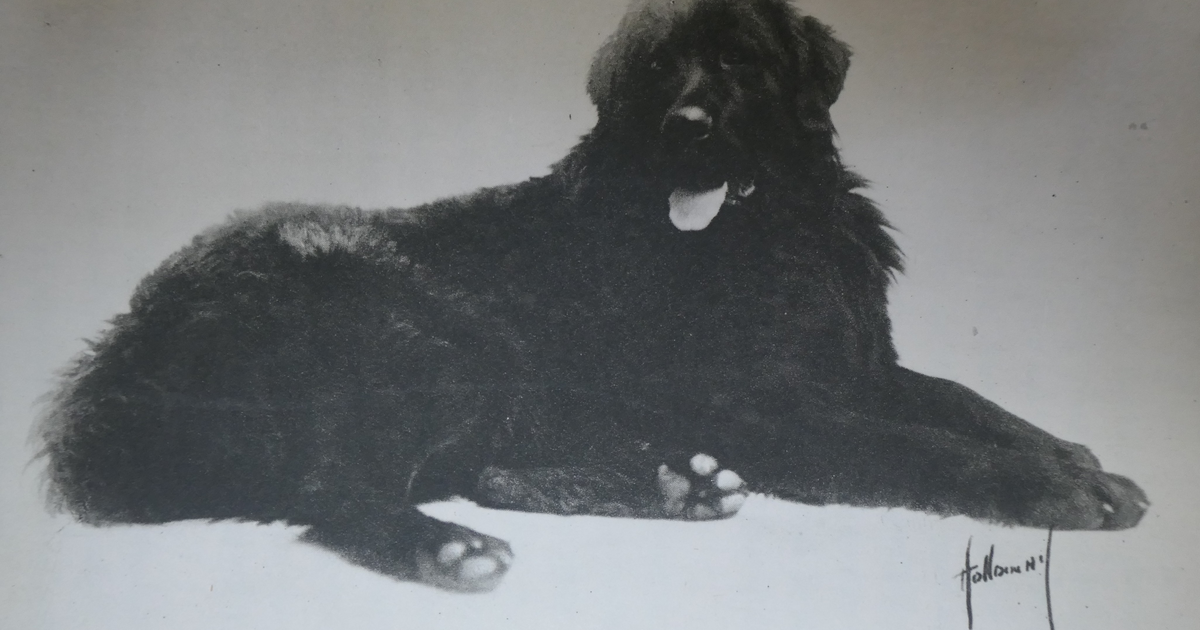
What has changed since 2005 is the breed list. A single, expanding repeat in a single gene has now turned up, one case report at a time, in dogs that share almost nothing with a Dachshund physically: Beagles, Chihuahuas, the Pembroke Welsh Corgi, and — reported in 2021 — the Newfoundland, a giant working breed bred for water rescue rather than for going to ground after vermin. Mari et al. (2021, Journal of Small Animal Practice) describe this as the first reported Newfoundland diagnosed with myoclonic epilepsy that was subsequently confirmed, on genetic testing, to carry the homozygous NHLRC1 dodecamer expansion — the same molecular lesion, in a dog roughly ten times the Dachshund’s weight.
The Canadian genetics laboratory Laboratoire de génétique vétérinaire now lists five breeds with confirmed NHLRC1-linked Lafora disease: Beagle, Chihuahua, Miniature Wirehaired Dachshund, Pembroke Welsh Corgi, and Newfoundland. A mutation does not travel with a breed’s job description. It travels with whichever founding dogs carried it, however few, and a large, loyal, gentle giant is exactly the kind of dog whose owner is least likely to have this on their radar.
What Lafora disease actually does to a dog, and why “late-onset” is the trap
Lafora disease is a form of progressive myoclonic epilepsy. The clinical picture, consistent across the breeds it has now been reported in, includes myoclonic jerks (brief, shock-like muscle twitches, often triggered by flickering light, sudden noise, or movement near the dog’s head), jaw-smacking, panic-like or startle episodes, generalised or complex partial seizures, and — as the disease advances — visual impairment, ataxia (loss of coordination), personality changes including aggression, and incontinence.
Because sudden noise is a documented trigger, two dates on the calendar deserve specific mention for a mid-life or older Newfoundland. In the US, the run-up to and evening of July 4th (Independence Day) brings days of unpredictable residential fireworks in most states, not just a single evening’s display. In the UK, Bonfire Night (5 November, Guy Fawkes Night) plays the same role, with organised and back-garden fireworks often continuing for the surrounding weekend. Neither holiday causes Lafora disease, but for a dog already carrying the mutation, these are realistic windows for a first myoclonic episode to surface or for existing episodes to cluster — owners of an at-risk or diagnosed dog should plan ahead for a quiet, interior room, white noise, and (if your vet has already discussed it) any as-needed anti-anxiety medication for those specific dates, the same way you would for a dog with ordinary noise phobia.
The word “late-onset” undersells how disruptive that timing is. According to Dachshund Health UK, signs typically become apparent “any time from age 5+” — which in practice means an outwardly healthy, already-bred dog can start showing symptoms well into adulthood, years after any breeding decisions involving that dog have already been made. There is no cure. The Basset Hound Club of America summarises the management reality bluntly: diet and anti-epileptic medication are “thought to help in controlling seizures, but Lafora is ultimately fatal.” Management is about buying comfortable time, not reversing the disease — and every treatment decision, including which anticonvulsant to use and how aggressively to manage diet, belongs with your veterinarian and, ideally, a veterinary neurologist.
Where the Newfoundland sits: common enough to matter, uncommon enough to be missed
SamNewfoundlands aren’t some obscure breed though. Wouldn’t more vets already know about this? Elena MarshNot necessarily — AKC ranked the Newfoundland 46th out of 202 breeds in 2025, popular but far from a Labrador-level caseload most vets see daily.The Newfoundland is not a rare breed by any objective measure, but it is not a common one either, which is precisely the gap that lets a disease slip under the radar. In the American Kennel Club’s 2025 popularity rankings, the Newfoundland placed 46th out of 202 recognised breeds — solidly mid-table, well behind the retrievers and companion breeds that dominate general practice caseloads, but nowhere near the numerically tiny, closed gene pools of some at-risk breeds.
That middling population size cuts both ways for genetic disease. It is large enough that a single founder carrying a harmful variant can spread it through a meaningful number of breeding lines before anyone notices a pattern — exactly how the Dachshund’s Lafora mutation and, in an unrelated example, the Collie’s MDR1 mutation both became entrenched. At the same time, it is not so numerous that any individual general practitioner sees Newfoundlands often enough to have Lafora disease pre-loaded as a differential the way they might for a breed-defining condition in a top-ten breed. The result is a breed where owner awareness, not clinician pattern recognition, is often the first line of defence.
Testing your Newfoundland in the United States
Two laboratories currently offer an NHLRC1/Lafora test that explicitly covers the Newfoundland. Paw Print Genetics, now part of Neogen, lists a dedicated “Lafora Disease in the Newfoundland” test page, and the Basset Hound Club of America confirms the sample type is a simple cheek swab that owners can collect at home and mail in — no veterinary visit required to obtain the sample itself, although your vet should still be involved in interpreting the result.
An international alternative is the Czech laboratory Genomia, which lists the Newfoundland among the breeds it tests for NHLRC1-linked Lafora disease at a published price of $90 per test (excluding VAT), with a stated turnaround of 14 business days. Genomia is ISO 17025-accredited and accepts international submissions, which makes it a reasonable second opinion or a fallback if a US-specific provider’s timeline does not fit your schedule. As with any genetic testing provider, confirm current pricing, sample requirements and shipping instructions directly on the lab’s own order page before you send a sample, since terms change.
Testing your Newfoundland in the United Kingdom
UK owners have a Kennel-Club-linked option with a longer track record on this exact gene. LABOKLIN UK’s Lafora Disease (LAF/LD) / Myoclonic Epilepsy test explicitly lists the Newfoundland alongside Basset Hound, Beagle, Cardigan Welsh Corgi, Chihuahua, French Bulldog, Miniature Wirehaired Dachshund, and Pembroke Welsh Corgi. The published price is £96.00 including VAT. Unlike many DNA panels, LABOKLIN currently accepts only whole blood in an EDTA tube (0.5–1 ml) for this specific test — cheek swabs are not accepted for Lafora at the time of writing — so plan for a veterinary blood draw rather than a home kit, and expect a turnaround of 2–4 weeks.
LABOKLIN’s route to Kennel Club recognition for this exact assay is worth knowing, because it shows the testing infrastructure for Lafora disease is more mature than a brand-new mutation report might suggest. According to Dachshund Health UK, the Kennel Club first approved a Lafora DNA test through the Wirehaired Dachshund Club in March 2013, sourced from the original Toronto research team; in early 2019, LABOKLIN received its own Kennel Club approval for a blood-based Lafora test, after which the older breed-club scheme was wound down. The Newfoundland now sits on that same, already-vetted assay.
What pet insurance will actually pay for
SamIf I get the test done, will my insurance at least cover the cost? Elena MarshAlmost certainly not the test itself — that’s routine screening, not treatment for an active illness.Two separate money questions get conflated here, and US and UK insurers answer them the same way in broad strokes even though the products differ in detail.
The genetic test itself is, in general, treated as preventive or wellness spending rather than treatment for an illness, and standard accident-and-illness policies are not built to reimburse it. Some providers sell an optional wellness add-on that may cover part of the cost — check whether genetic screening is named explicitly rather than assuming it is bundled in.
Treatment for an actual seizure disorder is a different, and more insurable, event — provided the timing works in your favour. AKC Pet Insurance offers hereditary and congenital condition coverage as an add-on, subject to a 30-day waiting period and the condition not being pre-existing. In the UK, Petplan states that hereditary conditions are covered provided they have not shown symptoms before the policy started, and ManyPets similarly draws a hard line around symptom onset relative to the policy date, with limited, higher-premium products available for dogs that already have a documented pre-existing condition.
The practical takeaway is the same on both sides of the Atlantic: insure your Newfoundland puppy before any seizure activity is on record, read the policy for the words “hereditary,” “congenital,” and “pre-existing,” and — if your dog has already had an episode — ask your insurer in writing whether a subsequent genetic test result would itself be treated as evidence of a pre-existing condition. Get the answer before you need it, not during a crisis.
From general practice to a veterinary neurologist
In both the US and the UK, a general practice veterinarian is almost always the first stop for any dog showing myoclonic jerks or seizure-like activity, and referral to a specialist flows from there rather than around it. The standard first step is a physical exam and bloodwork to rule out metabolic causes — liver shunts, low blood sugar, electrolyte disturbances and toxin exposure can all produce seizure-like signs and are treatable in general practice without ever reaching a neurologist.
Referral to a board-certified veterinary neurologist typically becomes the right move when seizures are new and poorly controlled, when the pattern does not fit typical idiopathic epilepsy for the dog’s age, or when a general practitioner’s first-line anticonvulsant plan is not working. Any seizure lasting more than a few minutes, or seizures that repeat in clusters without the dog recovering normally in between, is standard veterinary teaching for treating the episode as an emergency requiring same-day care rather than a routine appointment. In the UK, referral neurology centres such as Eastcott Referrals, based in Swindon, Wiltshire, publish a fixed-price diagnostic package — in their case £2,600 covering a neurologist consultation, MRI with radiologist interpretation, and cerebrospinal fluid analysis if needed — which gives owners a concrete number to budget against before committing to advanced imaging. The UK’s board-certified veterinary neurologists are concentrated in a handful of referral hospitals (mostly clustered around London, the South East, and a few university cities), so an owner in rural Wales, the Scottish Highlands, or Cornwall should expect a multi-hour drive, not a same-day local appointment.
The US picture is more extreme because of scale: board-certified veterinary neurologists are members of the American College of Veterinary Internal Medicine (ACVIM)‘s Neurology specialty, and they are concentrated overwhelmingly in and around major metropolitan areas and university veterinary teaching hospitals. An owner in a large coastal city may have a specialist within a 30-minute drive; an owner in a rural state with no veterinary school nearby (much of the Mountain West and parts of the rural Midwest and South) can face a same-day round trip of several hours, or an overnight stay, to reach the nearest ACVIM-certified neurologist or a 24-hour emergency/specialty hospital equipped for MRI. If you live in a rural area, it is worth identifying your nearest referral or university veterinary hospital before an emergency, not during one — general practice vets can usually name it immediately if asked.
For a suspected Lafora case specifically, the genetic test is what turns “epilepsy of unknown cause” into a confirmed diagnosis without necessarily requiring MRI and CSF analysis first — but the decision about which tests to run, and in what order, should be made with your vet or neurologist based on your individual dog’s presentation, not from an article.
A national screening scheme already worked once — for a different breed
SamIs there anything Newfoundland breeders can actually do about this, or is it just wait and see? Elena MarshThere’s a working template — a UK-wide testing scheme cut Lafora carrier rates in Dachshunds from 41.5% to 25.7% in six years.The clearest evidence that testing changes outcomes, for this exact gene, comes from the breed that started this whole story. Ahonen SJ et al. (2018, Canine Genetics and Epidemiology 5:2) describe a coordinated UK programme — the Kennel Club, the Dachshund Breed Council and the Wire Haired Dachshund Club working with the original Toronto research group — that made NHLRC1 testing a requirement of the Kennel Club’s Assured Breeder Scheme for Miniature Wirehaired Dachshunds starting in 2014, with results published quarterly for transparency. Over six years of tracked data, the mutant allele’s spread in the tested population reversed: homozygous-affected dogs fell from 10.4% to 2.7%, carrier frequency dropped from 41.5% to 25.7%, clear dogs rose from 48.1% to 71.6%, and the proportion of litters bred from two clear or clear-and-carrier-safe parents (“safe litters”) rose from 45% to 92.1%.
No equivalent mandatory scheme currently exists for the Newfoundland — the mutation was only confirmed in the breed in 2021, and one case report is not a population survey. But the infrastructure the Dachshund community built is not breed-specific: the same LABOKLIN assay that now serves the Newfoundland is the direct descendant of the Kennel-Club-approved Dachshund test, and the Ahonen data is the strongest available argument for why a Newfoundland breeder should test proactively rather than wait for a mandate. Until population-level frequency data exists for this breed, the responsible default for anyone breeding a Newfoundland is the same as it was for the Dachshund in 2012: test both parents before the litter, not after a puppy shows signs at five years old.
Frequently asked questions
Q. Is Lafora disease common in Newfoundlands?
It is not known to be common — as of the 2021 case report, only one Newfoundland has been publicly confirmed with the homozygous NHLRC1 dodecamer expansion (Mari et al., 2021). No population-wide carrier-frequency survey has been published for the breed, unlike the Dachshund. That absence of data is a reason for caution, not reassurance.
Q. My Newfoundland is showing occasional muscle twitches. Does that mean Lafora disease?
Not necessarily. Myoclonic jerks and seizure-like signs have many causes, including metabolic conditions that are treatable in general practice. See your veterinarian promptly for an exam and bloodwork; genetic testing is one tool among several, not a first-line diagnostic on its own.
Q. What sample does the NHLRC1 test need?
It depends on the lab. Neogen/Paw Print Genetics uses a cheek swab per the Basset Hound Club of America, while LABOKLIN UK currently requires whole blood in an EDTA tube for this specific test. Confirm sample requirements on the lab’s own page before collecting anything.
Q. Will pet insurance pay for the genetic test?
Generally no. Genetic testing on a healthy dog is treated as preventive spending, not as treatment for an illness, under standard US and UK policies. Treatment for an actual seizure disorder is more likely to be covered, but only if no symptoms were recorded before the policy started — see AKC Pet Insurance and Petplan for how each defines that cut-off.
Q. Is there a cure or a way to stop the disease from progressing?
No. Lafora disease is progressive and currently incurable in dogs. Anti-epileptic medication and dietary management can help control seizure frequency and severity for a period, but according to the Basset Hound Club of America, the disease is ultimately fatal. Discuss realistic goals of care with your veterinarian or a veterinary neurologist.
Q. Should I test a Newfoundland puppy before buying it?
Asking the breeder for both parents’ NHLRC1 test results is a reasonable request, in the same way it already is for Dachshund and Corgi buyers. Given that Lafora signs typically do not appear until age 5 or later, a young, symptom-free puppy’s own status cannot be assumed from appearance alone — only a genetic test or verified clear/tested parentage tells you anything useful at that age.
Related articles
Related inherited-disease articles and the test-service coverage table.
Read about the same gene in other languages
References
- Mari L, Comero G, Mueller E, Kuehnlein P, Kehl A. NHLRC1 homozygous dodecamer expansion in a Newfoundland dog with Lafora disease. Journal of Small Animal Practice. 2021;62(11):1030-1032. https://onlinelibrary.wiley.com/doi/abs/10.1111/jsap.13396
- Lohi H, Young EJ, Fitzmaurice SN, et al. Expanded repeat in canine epilepsy. Science. 2005;307(5706):81. https://pubmed.ncbi.nlm.nih.gov/15637270/
- Ahonen SJ, Seath IJ, Rusbridge C, et al. Nationwide genetic testing towards eliminating Lafora disease from Miniature Wirehaired Dachshunds in the United Kingdom. Canine Genetics and Epidemiology. 2018;5:2. https://pmc.ncbi.nlm.nih.gov/articles/PMC5869781/
- Laboratoire de génétique vétérinaire. Epilepsy, myoclonus of Lafora. https://labgenvet.ca/en/disease/epilepsy-lafora-dachshund-miniature-wirehair/
- Basset Hound Club of America. What is Lafora disease? https://basset-bhca.org/what-is-lafora-disease/
- Dachshund Health UK. Lafora Disease. https://www.dachshundhealth.org.uk/lafora-disease
- Paw Print Genetics (Neogen). Lafora Disease in the Newfoundland. https://www.pawprintgenetics.com/products/tests/details/418/?breed=78
- Genomia. Testing of dogs: Lafora epilepsy. https://www.genomia.cz/en/test/lafora/
- LABOKLIN UK. Lafora Disease (LAF/LD) / Myoclonic Epilepsy. https://www.laboklin.co.uk/laboklin/showGeneticTest.jsp?testID=8005
- American Kennel Club. The Most Popular Dog Breeds of 2025. https://www.akc.org/expert-advice/dog-breeds/most-popular-dog-breeds-2025/
- AKC Pet Insurance. Hereditary & Congenital Conditions Insurance Coverage. https://www.akcpetinsurance.com/plans/congenital-conditions-coverage
- Petplan UK. Pet insurance for pre-existing conditions. https://www.petplan.co.uk/pet-insurance/pre-existing-conditions.html
- ManyPets UK. Pet Insurance cover for pre-existing conditions. https://manypets.com/uk/pet-insurance/pre-existing-conditions/
- Eastcott Referrals. Neurology & Neurosurgery. https://www.eastcottreferrals.co.uk/referral-services/neurology-and-neurosurgery/
How to get your pet tested
Some pet DNA tests screen for hereditary-disease carrier status or genetic risk markers, but the results are information, not a diagnosis. If your pet has symptoms or you need a confirmed diagnosis, please consult your veterinarian.
Below is where Lafora disease (NHLRC1) can be tested, grouped by where you live and marked by whether each service explicitly lists this variant (✅ = listed / ❓ = unverified / ❌ = not offered).
In the United States
In the United Kingdom
In India
Elsewhere
Note: even if the kit can be purchased/shipped internationally, the service itself (sample return, analysis, results) is not guaranteed in your country. Check each service’s stated service area and sample-return method before ordering.
Services offered in other regions (may not be available where you live)
Worried about your pet’s health? — Talk to a veterinarian
A confirmed diagnosis and any treatment plan are decisions for a veterinarian, not a test kit. The links below are professional resources.
AVMA — Find a veterinarian (American Veterinary Medical Association)
This section contains advertising (affiliate links); we may earn a commission if you buy through them. As an Amazon Associate, we earn from qualifying purchases. Genetic tests do not guarantee the prevention, diagnosis, or treatment of any disease — results indicate tendencies and provide information only.
This page is educational information, not veterinary diagnosis or advice. Always consult a veterinarian about your pet’s health.
About the author
Elena Marsh
Editor & writer (not a veterinarian)
A writer with a molecular-biology background and a lifelong dog and cat owner. Not a veterinarian — she translates peer-reviewed genetics research and primary data into plain language, always as information rather than diagnosis.