Bottom line: Labrador Retrievers carry a breed-specific cause of narcolepsy — HCRTR2 c.1105+5G>A, a single base change at the splice donor site of intron 6 that deletes exon 6 from the receptor. It was mapped and published by Lin et al. (1999, Cell 98:365-376) and is autosomal recessive, so only carrier-to-carrier matings produce affected puppies. Three practical points matter most for owners and breeders in the US and UK. (1) The Labrador variant is not the Doberman or Dachshund variant. Each breed has a different mutation in the same gene, so ordering the wrong panel returns a meaningless “clear.” (2) Testing is genuinely easy to buy here — UC Davis VGL runs a Labrador-specific test, Paw Print Genetics offers all three canine variants, and Embark and Wisdom Panel include narcolepsy in their consumer panels. (3) Unlike most inherited neurological disease, this one does not progress and does not shorten life (Tonokura et al. 2007, Veterinary Record 161:375-380). If your puppy is collapsing, see your veterinarian before you order a DNA test — cataplexy, syncope from heart disease, and seizure activity look similar on a first pass, and only a clinical exam sorts them out.
- Why this matters more in Labradors than the raw numbers suggest
- What the collapse actually looks like
- Same gene, four different mutations — order the right one
- Where to buy the test in the US and UK
- How this fits into OFA, CHIC and a breeding programme
- What the law actually covers — and what it leaves to you
- Insurance, cost and the pre-existing condition trap
- The research angle: this dog gene rewrote human sleep medicine
- Living with an affected dog
- Frequently asked questions
- References
- How to get your pet tested
Why this matters more in Labradors than the raw numbers suggest


The Labrador Retriever has been the most-registered breed with the American Kennel Club for most of the past three decades, and it is the backbone of guide dog, assistance dog, and detection dog programs on both sides of the Atlantic. That changes the stakes of a sleep disorder.
Cataplexy is triggered by positive emotional arousal — food, play, greeting a handler. Those are exactly the moments a working dog is being asked to perform. A dog whose hind legs buckle when a reward appears is not a candidate for guide work, no matter how sound the hips and elbows are. Assistance dog organisations invest heavily in each puppy raised, so any heritable trait that disqualifies a dog late in training is expensive, and breeding colonies have a strong incentive to screen upstream.
For pet owners, the calculus is different but not trivial. A Labrador that collapses on a staircase or beside a swimming pool is at real risk of injury even though the underlying condition is benign.
What the collapse actually looks like
SamHow do I tell cataplexy from a seizure? Elena MarshWatch the muscles and the eyes. Cataplexy is flaccid and the dog stays conscious; a seizure is usually rigid or paddling with altered awareness.Tonokura et al. (2007) describe the clinical picture consistently across affected dogs:
- Trigger: a burst of positive emotion — food being served, play being offered, the owner coming home. Not fear, not pain, not exertion.
- Onset order: the hind limbs buckle first, then the neck drops, then the dog goes down.
- Muscle tone: flaccid throughout. No rigidity, no paddling, no jaw chomping.
- Consciousness: preserved. The eyes stay open and the dog tracks moving objects.
- Duration: seconds to a few minutes, with spontaneous recovery. Longer episodes may roll into sleep.
- Age at onset: typically between four weeks and six months.
None of this is a diagnosis you should make at home. Syncope from a cardiac arrhythmia can also produce a flaccid collapse with rapid recovery, and it is not benign. Exercise-induced collapse (DNM1), which is common in Labradors, is triggered by strenuous exercise rather than excitement and looks different but overlaps enough to confuse an owner.
The single most useful thing you can bring to the exam room is video. Episodes rarely happen on cue during a consultation, and your veterinarian is being asked to characterise an event they have not seen. A ten-second clip on a phone is worth more than a paragraph of description, and it is what a referral to a board-certified neurologist (ACVIM) will be built on.
Same gene, four different mutations — order the right one
SamCan I just buy a test that says HCRTR2 on it? Elena MarshNot safely. Four breeds, four different mutations, and the lab methods are not interchangeable.Canine narcolepsy is catalogued as OMIA:000703-9615, and every known causal variant sits in HCRTR2. But the variants themselves are breed-specific and structurally different from one another:
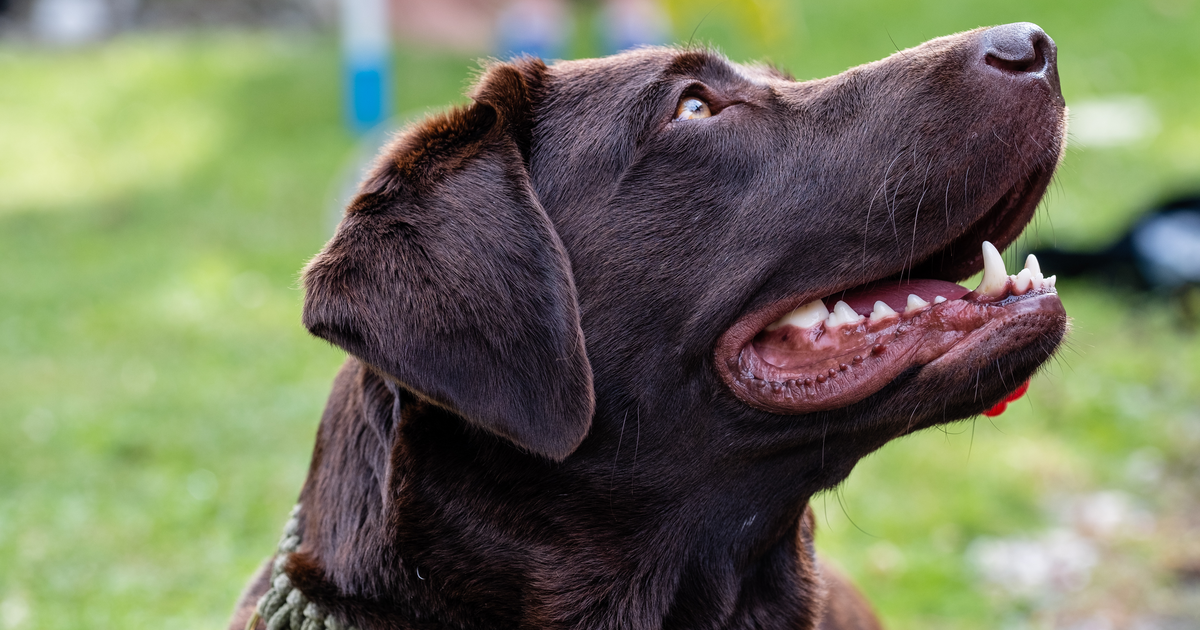
- Labrador Retriever — c.1105+5G>A. A G-to-A transition at position +5 of the intron 6 splice donor. The splice defect was experimentally confirmed and causes skipping of exon 6 (Lin et al. 1999).
- Doberman Pinscher — a 226 bp SINE insertion in intron 3, causing exon 4 to be skipped (same paper).
- Dachshund — c.160G>A (p.E54K), a missense change in exon 1 (Hungs et al. 2001, Genome Research 11:531-539).
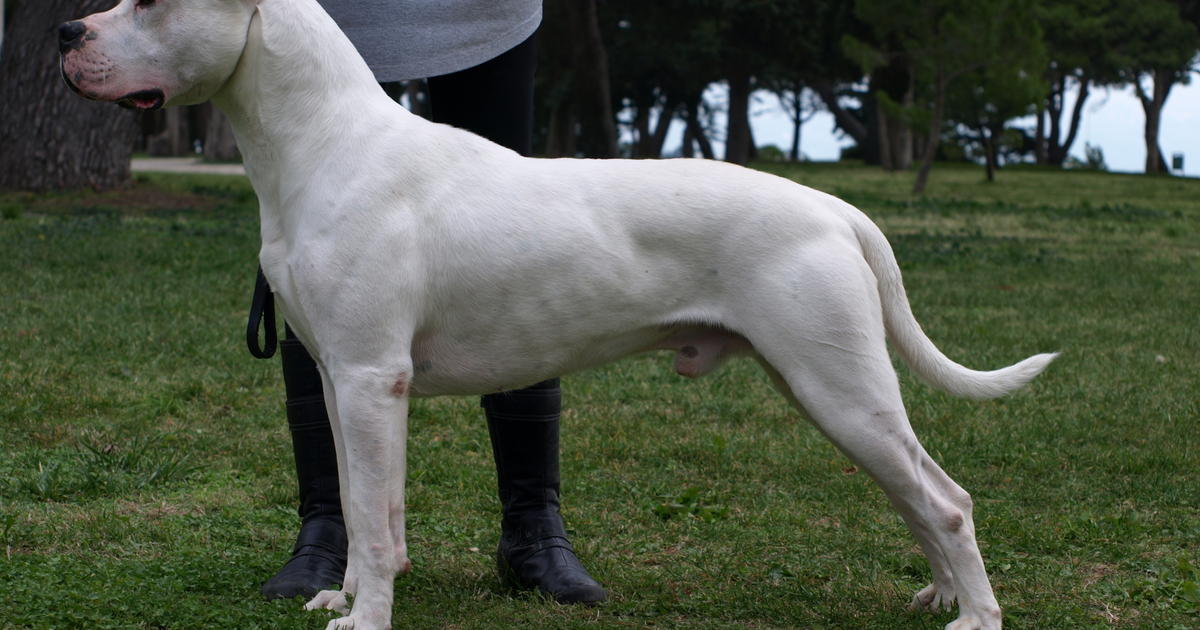
- Dogo Argentino — c.403_762dup, an in-frame tandem duplication reported only recently (Mondino et al. 2025, Journal of Veterinary Internal Medicine 39:e70056).
A substitution, an insertion, a splice-site change and a duplication need different assays. Laboklin makes this explicit on its test page: sequencing for the Dachshund and Doberman variants, a TaqMan SNP assay for the Labrador variant, with different turnaround times for each.
The practical rule: when you order, name the breed and the variant. “Narcolepsy, Labrador Retriever type, HCRTR2 c.1105+5G>A” leaves no room for a mis-run panel.
Where to buy the test in the US and UK
SamWhich of these should I actually use? Elena MarshDepends on why you are testing. A breeding decision wants a clinical-grade single test; general curiosity is fine on a consumer panel.This is one of the rare canine variants where the English-speaking market is genuinely well served:
- UC Davis Veterinary Genetics Laboratory — a university lab running a Labrador-specific narcolepsy test that owners can order directly. It also runs a separate Doberman test, which is a useful signal that the two are not the same assay.
- Paw Print Genetics — a clinical-grade lab in Spokane, Washington offering all three long-established variants as standalone tests, with breed-specific ordering pages.
- Embark — consumer cheek-swab panel that includes narcolepsy alongside 250+ conditions. Convenient, and the breed-ancestry data is a bonus, but read carefully which variant is on the panel.
- Wisdom Panel — screens the Labrador and Dachshund variants on its Premium panel and publishes UK-facing condition pages, which matters if you are ordering from Britain.
A caution that is specific to this market. Direct-to-consumer pet genetic testing in the US and UK is essentially unregulated. There is no equivalent of clinical laboratory oversight for dog DNA panels, no requirement to publish validation data, and no standard for how results are reported. Moses, Niemi and Karlsson (2018, Nature 559:470-472) argued in a widely cited comment that the industry needs exactly that oversight, describing cases where owners made irreversible decisions on the strength of an unvalidated result.
That is not an argument against testing. It is an argument for knowing which laboratory ran which assay, and for confirming a consumer-panel result with a clinical-grade single test before you act on it in a breeding programme.
How this fits into OFA, CHIC and a breeding programme
SamIs narcolepsy part of the standard Labrador health clearances? Elena MarshNo. CHIC for Labradors covers hips, elbows, eyes and EIC. Narcolepsy sits outside that list, so nobody will ask you for it.The Orthopedic Foundation for Animals administers the CHIC programme, which defines the breed-specific set of health screenings a Labrador needs for a CHIC number. That list is built around the high-prevalence problems in the breed — hip and elbow dysplasia, eye clearance, and exercise-induced collapse.
Narcolepsy is not on it. This means two things in practice. First, you will not be prompted: no registry, no stud contract and no puppy buyer checklist is going to ask for it by default. Second, if narcolepsy has appeared in your lines, the testing decision is entirely yours to initiate.
Because the condition is autosomal recessive, the breeding arithmetic is simple and forgiving:
- Carrier × Clear → 0% affected, 50% carriers, 50% clear. Entirely safe to use.
- Carrier × Carrier → 25% affected. This is the only combination to avoid.
- Clear × anything → 0% affected.
Do not cull carriers wholesale. The Labrador gene pool is large but heavily concentrated in popular sires, and removing every carrier of a benign, non-progressive recessive condition trades a manageable problem for an unmanageable loss of diversity. Restricting carriers to clear mates eliminates affected puppies completely while keeping the dog’s other qualities in the pool.
What the law actually covers — and what it leaves to you
SamIs any of this regulated? Who checks that a breeder tested the dog? Elena MarshNobody, in the genetic sense. The law regulates how puppies are sold and how breeders are licensed — not which variants get screened.There is a persistent assumption that genetic testing in dogs sits inside some regulatory framework. It does not. Knowing exactly where the legal lines fall saves a lot of misplaced trust.
In the United States, the statute owners most often cite is the wrong one. The Genetic Information Nondiscrimination Act (GINA) of 2008 prohibits the use of genetic information in health insurance and employment decisions — for people. It has no application to dogs, and no equivalent protection exists on the animal side. Nothing stops a pet insurer from taking canine genetic results into account, and nothing requires a laboratory to validate a canine assay before selling it.
What is regulated is the breeding and selling side. Under the Animal Welfare Act, USDA APHIS licenses commercial dog breeders and dealers above a threshold — broadly, those maintaining more than four breeding females and selling puppies sight-unseen (online, by phone, or through brokers and pet stores). Breeders at or below that threshold selling offspring raised on their own premises are exempt. Either way, the licence covers housing, husbandry and veterinary care — not genetic screening. A fully compliant, licensed breeder can have tested for nothing at all.
In the United Kingdom, the picture is stricter on sales but equally silent on genetics. Lucy’s Law, in force in England since April 2020 and subsequently in Wales and Scotland, bans the commercial third-party sale of puppies and kittens — buyers must deal with the breeder directly or go through a rehoming centre. Licensing of breeders in England sits under the Animal Welfare (Licensing of Activities Involving Animals) Regulations 2018, administered by local authorities; Scotland and Wales run their own licensing regimes.
The practical effect of Lucy’s Law is worth spelling out: it puts you face to face with the person who bred the litter. That is precisely the conversation in which “did you test the sire and dam for the Labrador narcolepsy variant?” is a fair and answerable question. The law hands you the access; it does not hand you the answer.
The nearest thing to a genetic standard in the UK is voluntary, and it changed recently. The Kennel Club Assured Breeder Scheme closed at the end of 2024 and has been replaced by the Royal Kennel Club’s Health Standard, which sets out testing priorities for every breed in two tiers — Good Practice (the critical starting set) and Best Practice (all recommended tests). The stated reason for the change was reach: the old scheme covered only about a tenth of Kennel Club litters, whereas the Health Standard is aimed at every breeder who registers a litter. As with OFA’s CHIC in the US, narcolepsy is not among the listed tests for Labradors — both frameworks concentrate on hips, elbows, eyes and the high-prevalence conditions.
So the honest summary for both markets: the regulation governs how the puppy reaches you and how it was housed, never which genes were checked. Screening for this variant is entirely discretionary, which is why the question has to come from the buyer.
Insurance, cost and the pre-existing condition trap
SamWill pet insurance cover this in the States or the UK? Elena MarshOften yes for hereditary conditions — but only if you insured before any sign appeared. That order matters enormously.Costs in this market are modest and predictable:
- Single clinical-grade test: roughly USD 50-80 per variant at a university or specialist lab, or GBP 45-70 for a UK-facing equivalent.
- Consumer panel: roughly USD 130-200 for a breed-plus-health kit that covers narcolepsy among hundreds of other markers.
- Sample: a cheek swab. No blood draw, no sedation, no veterinary appointment required for owner-ordered tests.
Insurance is where the US and UK diverge sharply from most other markets. Many US and UK policies do cover hereditary and congenital conditions — this is a standard selling point in both markets, unlike jurisdictions where genetic disease is excluded outright. But every policy excludes pre-existing conditions, and an episode of collapse documented in the clinical record before the policy starts will be treated as pre-existing.
In the UK the additional wrinkle is policy type: lifetime policies renew the annual limit for ongoing conditions, whereas time-limited or maximum-benefit policies stop paying for a condition after twelve months or after the benefit cap is reached. For a lifelong, non-curable condition managed with medication, that distinction is the whole ballgame.
The practical sequence for a new puppy is therefore: insure first, then investigate. Reversing those two steps can permanently exclude the condition you are most concerned about.
The research angle: this dog gene rewrote human sleep medicine
SamWhy was this discovery such a big deal? Elena MarshBecause human narcolepsy research was stuck. The dog colony gave the field the gene, and the human mechanism followed within a year.Lin et al. (1999) reached HCRTR2 through a decade of linkage and comparative physical mapping, narrowing the search to a 1.8 Mb region of canine chromosome 12 before a positional candidate emerged. OMIA calls the effort “Herculean,” which is unusual language for a database entry.
The payoff extended well past veterinary medicine. Once loss of hypocretin (orexin) receptor signalling was shown to cause narcolepsy in dogs, human researchers found that human narcolepsy involves loss of the hypocretin-producing neurons themselves. Cerebrospinal fluid hypocretin-1 measurement became a diagnostic tool in human sleep medicine, and the orexin system became a drug target.
Two findings from that literature matter directly to owners. Mishima et al. (2008, Sleep 31:1119-1126) showed that affected dogs lack functional HCRTR2 while retaining normal hypocretin levels and normal numbers of hypocretin neurons — the receptor is broken, not the signal. And Tonokura et al. (2003, Veterinary Record 152:776-779) documented a sporadic, hypocretin-deficient case in a Chihuahua with no receptor mutation.
That second point is the limit of the DNA test. A “clear” result rules out the inherited form. It does not rule out narcolepsy.
Living with an affected dog
SamIf a dog does test affected, what changes day to day? Elena MarshLess than owners fear. It does not progress, lifespan is normal, and cataplexy responds to medication in many dogs.Tonokura et al. (2007) state plainly that canine narcolepsy is neither progressive nor life-threatening, and OMIA records the same. Management is about safety and predictability, not about slowing a decline:
- Flatten the excitement peaks. Feed calmly rather than with a build-up. Greet on arrival without a crescendo. Fewer arousal spikes means fewer episodes.
- Engineer the environment. Stairs, hard floors, and open water are the real hazards. Gates, runners and supervision around pools do more for an affected Labrador than any medication.
- Discuss medication with your veterinarian. Tricyclic antidepressants such as imipramine and clomipramine reduce cataplexy in affected dogs (Tonokura et al. 2007). Dose and suitability are clinical decisions — do not medicate on the strength of an article.
- Adjust expectations for work, not for life. An affected dog is unsuited to guide or assistance work and to any role where a sudden collapse is dangerous. As a pet, the outlook is normal.
Frequently asked questions
Q. Is narcolepsy in Labradors the same test as in Dobermans?
No. Both are in HCRTR2, but the Labrador variant is a splice-site substitution (c.1105+5G>A) and the Doberman variant is a 226 bp SINE insertion. Different assays are used for each, and UC Davis lists them as separate tests.
Q. My dog tested clear. Can it still develop narcolepsy?
Yes. The sporadic, non-inherited form involves hypocretin deficiency rather than a receptor mutation and is invisible to DNA testing (Tonokura et al. 2003). A clear result rules out the inherited Labrador form only.
Q. Should I remove a carrier from my breeding programme?
Not necessarily. Bred to a clear mate, a carrier produces zero affected puppies. Blanket removal of carriers of a benign recessive condition costs genetic diversity for no gain in affected-puppy prevention.
Q. Is narcolepsy required for a CHIC number in Labradors?
No. The OFA CHIC requirements for the breed centre on hips, elbows, eyes and exercise-induced collapse. Narcolepsy testing is discretionary and owner-initiated.
Q. Will my insurance pay for it?
Many US and UK policies cover hereditary conditions, but all exclude pre-existing ones. If collapse episodes are already in the clinical record, expect an exclusion. In the UK, check whether the policy is lifetime rather than time-limited, since this is a lifelong condition.
Q. My puppy collapsed. What should I do first?
See your veterinarian before ordering any test. Cardiac syncope, seizure activity and exercise-induced collapse can all present similarly, and some of those are dangerous. This article is not a diagnosis. Bring video of an episode, and ask about referral to a board-certified neurologist if the picture is unclear.
References
- Lin L, Faraco J, Li R, Kadotani H, Rogers W, Lin X, Qiu X, de Jong PJ, Nishino S, Mignot E (1999) The sleep disorder canine narcolepsy is caused by a mutation in the hypocretin (orexin) receptor 2 gene. Cell 98(3):365-376.
- Hungs M, Fan J, Lin L, Lin X, Maki RA, Mignot E (2001) Identification and functional analysis of mutations in the hypocretin (orexin) genes of narcoleptic canines. Genome Research 11:531-539.
- Tonokura M, Fujita K, Nishino S (2007) Review of pathophysiology and clinical management of narcolepsy in dogs. Veterinary Record 161(11):375-380.
- Tonokura M, Fujita K, Morozumi M, Yoshida Y, Kanbayashi T, Nishino S (2003) Narcolepsy in a hypocretin/orexin-deficient chihuahua. Veterinary Record 152(25):776-779.
- Mishima K, Fujiki N, Yoshida Y, Sakurai T, Honda M, Mignot E, Nishino S (2008) Hypocretin receptor expression in canine and murine narcolepsy models and in hypocretin-ligand deficient human narcolepsy. Sleep 31(8):1119-1126.
- Mondino A, Vandewege MW, Artigas R, Delucchi L, Hermida KM, Yanez CE, Cullen JN, Friedenberg SG, Meurs KM, Stern JA, Olby NJ (2025) Familial narcolepsy in Dogo Argentino dogs is caused by a tandem duplication mutation in HCRTR2. Journal of Veterinary Internal Medicine 39:e70056.
- Moses L, Niemi S, Karlsson E (2018) Pet genomics medicine runs wild. Nature 559:470-472.
- OMIA:000703-9615 — Narcolepsy in Canis lupus familiaris (variant table and reported breeds)
- UC Davis Veterinary Genetics Laboratory — Narcolepsy in Labrador Retrievers
- UC Davis Veterinary Genetics Laboratory — Narcolepsy in Doberman Pinschers
- Paw Print Genetics — canine genetic disease testing
- Embark — Narcolepsy in dogs (health condition page)
- Wisdom Panel — Narcolepsy (Labrador), UK condition page
- Laboklin — Narcolepsy (breed list and assay method per variant)
- Orthopedic Foundation for Animals — CHIC breed requirements
- American Kennel Club — breed registration statistics
- American College of Veterinary Internal Medicine — finding a board-certified neurologist
How to get your pet tested
Some pet DNA tests screen for hereditary-disease carrier status or genetic risk markers, but the results are information, not a diagnosis. If your pet has symptoms or you need a confirmed diagnosis, please consult your veterinarian.
Below is where Narcolepsy (HCRTR2) can be tested, grouped by where you live and marked by whether each service explicitly lists this variant (✅ = listed / ❓ = unverified / ❌ = not offered).
In the United States
In the United Kingdom
In India
Elsewhere
Note: even if the kit can be purchased/shipped internationally, the service itself (sample return, analysis, results) is not guaranteed in your country. Check each service’s stated service area and sample-return method before ordering.
Services offered in other regions (may not be available where you live)
Worried about your pet’s health? — Talk to a veterinarian
A confirmed diagnosis and any treatment plan are decisions for a veterinarian, not a test kit. The links below are professional resources.
AVMA — Find a veterinarian (American Veterinary Medical Association)
This section contains advertising (affiliate links); we may earn a commission if you buy through them. As an Amazon Associate, we earn from qualifying purchases. Genetic tests do not guarantee the prevention, diagnosis, or treatment of any disease — results indicate tendencies and provide information only.
This page is educational information, not veterinary diagnosis or advice. Always consult a veterinarian about your pet’s health.
About the author
Elena Marsh
Editor & writer (not a veterinarian)
A writer with a molecular-biology background and a lifelong dog and cat owner. Not a veterinarian — she translates peer-reviewed genetics research and primary data into plain language, always as information rather than diagnosis.